Living Room · Tool · 4 min ·
How big should a living room rug be? Drag it under the sofa and see
A rug that's too small makes a living room feel unsettled; the right size ties the sofa and coffee table into one cosy group.
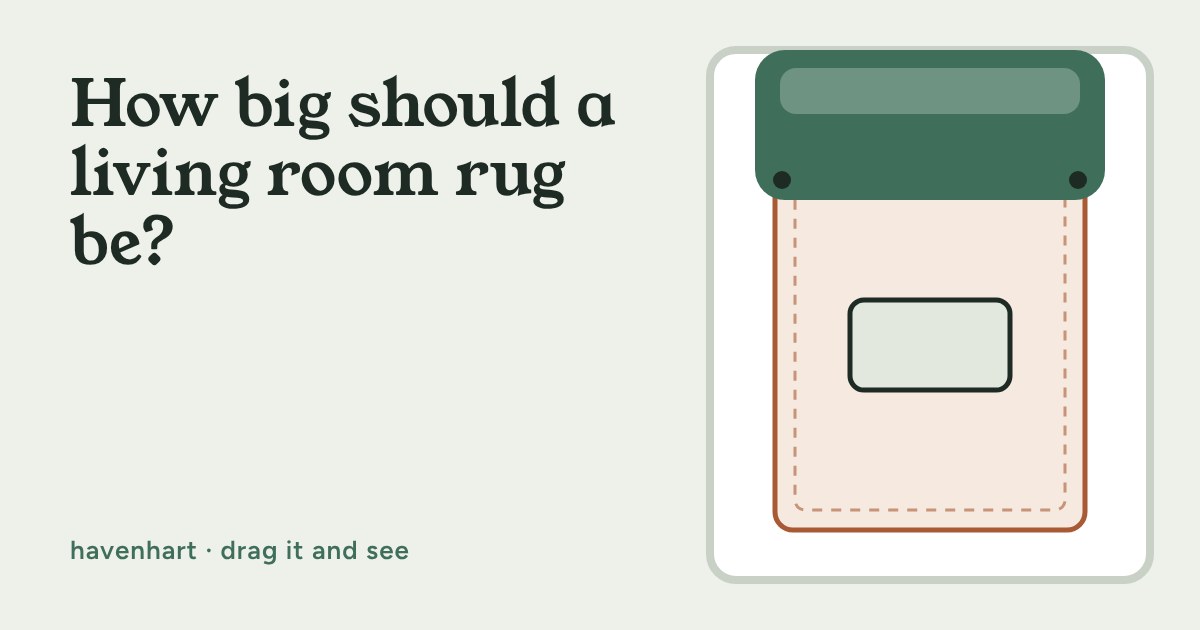
Drag a rug around a top-down plan of a living room, change the sofa width and rug size, and watch live checks for front legs on, the coffee table, the sides and the gap to the walls. Includes the rules of thumb, when to break them, and how to tape out a rug before you buy.
A living room rug that's too small is the quickest way to make a room feel unsettled: the sofa sits on the floor, the rug floats in the middle like a doormat, and nothing seems to belong together. The fix is almost never "buy something fancier". It's choosing the right size, and you can do that with a tape measure and a few minutes.
The idea: a rug ties the furniture into one group
A rug works like a frame. When the main pieces sit partly on it, your eye reads them as one cosy group instead of separate objects. That's why the useful question isn't "how big is my room?" but "how much of my furniture should touch the rug?"
There are three common ways to answer it, from roomiest to most modest:
- All legs on. Every piece in the seating group stands fully on the rug. It feels generous and calm, but it needs a big rug, so it suits larger rooms.
- Front legs on. The rug slides under the front legs of the sofa and chairs. This is the most forgiving choice and works in most living rooms.
- Floating. Only the coffee table sits on the rug and the sofa stays off. It can look right in a tiny room, but it's the easiest to get wrong, because the rug has to be clearly smaller than the sofa on purpose, not by accident.
Try it: drag the rug and watch the checks
Below is a plan of a living room seen from above. Enter your sofa's width, pick a rug size, then drag the rug around. The checks underneath update as you go.
How the numbers work
These are rules of thumb that interior designers and rug shops commonly use, not laws. Your room and your sofa decide the exact answer.
- Width: the rug should be at least as wide as the sofa, and ideally reach roughly 15–30 cm past each end so the sofa doesn't look like it's sliding off.
- Front legs on: the rug's back edge goes under the sofa, at least far enough that both front legs stand on it. Having one leg on and one off tilts the sofa slightly and looks accidental.
- Coffee table: either fully on the rug or fully off it. A table straddling the edge wobbles and looks unplanned.
- Walls: leave about 20–50 cm of bare floor between the rug and the walls. The smaller the room, the closer to 20 cm.
Common sizes in shops include 160 × 230 cm, 200 × 290 cm and 240 × 340 cm, but they vary by maker, so check the exact measurements on the product page.
When to break the rules
A small studio might not have the floor for a rug large enough to go under a sofa. That's fine: let the rug sit under the coffee table only, and make it clearly smaller than the sofa so it looks like a choice. A big open-plan room might call for the biggest rug you can find, so the seating area feels like its own corner.
Measure before you buy
Before you shop, measure your sofa's width and the free floor in front of it, then mark the rug's outline on the floor with masking tape or newspaper. Live with it for a day. It's the cheapest way to find out if the size feels right, and it works just as well for renters. Also measure the gap under doors, because a thick rug can stop a door from opening.
Reuse before you buy
If you already own a rug that's slightly too small, try moving it first: slide it towards the sofa, turn it by 90 degrees, or layer a small rug over a larger, cheaper flat-weave one. Second-hand rugs are also easy to find and are often well made. A cosy room doesn't need a new rug, it just needs the one you have in the right place.