
Budget€27.19
Intensions Complete Gordijnroede Kit Ø25mm Klei 160cm
A complete kit with brackets included, enough for a single average window once you add the overhang. Fine for lighter and medium curtains.
160 cm · Ø 25 mm · Complete kit
Textiles · Tool · 4 min ·
A curtain rod hung right on the window frame makes the window look smaller and leaves curtains sitting over the glass even when they are open. Hung a little higher and wider, the same window looks taller and lets in more light.
Set your window width and ceiling height, then move the rod and watch the open curtains. You get the rod length to buy, how much glass stays covered, and the gap left to the ceiling. Measure before you buy.
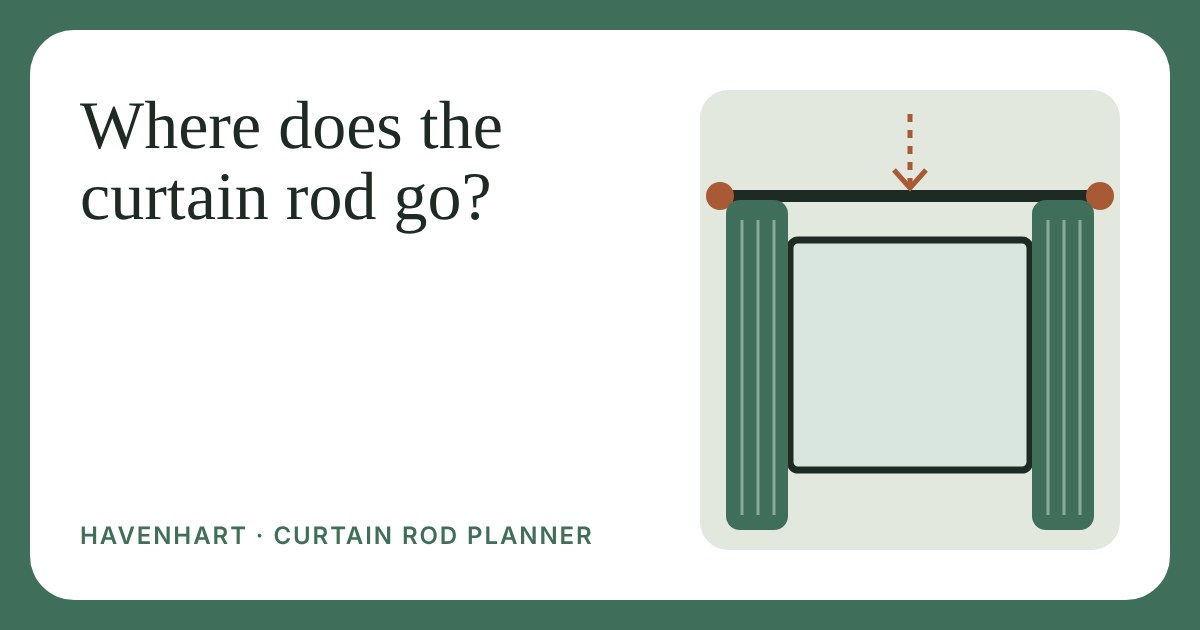
A curtain rod is the one fixing that decides how a whole window looks. Hang it right at the frame and the window looks small and the glass is half hidden by curtains even when they are open. Hang it higher and wider and the same window looks bigger, lets in more light and the curtains hang in longer, calmer lines. It costs nothing to move a rod on paper, so do that first.
Set your own window width and ceiling height, then move the rod. The picture shows the curtains pulled open to each side. Anything left over the glass is daylight you lose.
The main trick is to let the rod run past the window on both sides. When the curtains are open they bunch up beside the glass instead of in front of it. A common rule of thumb in guides is roughly 8 to 15 cm of rod beyond the frame on each side. A very narrow window can take more, and a bit more still looks generous, but keep it in proportion to the wall: a rod that runs into a corner or a wardrobe is a rod that is too long.
Now the practical part. Your rod length is the window width plus the overhang on both sides. Many rods are adjustable between a minimum and a maximum, so check that your number sits comfortably inside the range and not at the very end. Brackets go at the ends and, on wide windows, one in the middle, because a long rod with only two supports sags under heavy fabric.
Common advice puts the rod about 10 to 15 cm above the window frame, or halfway between the top of the frame and the ceiling if you want the room to feel taller. Try the third button above: raising the rod makes the window read as tall because the eye follows the long vertical line of the fabric. Leave a few centimetres below the ceiling so you can still reach the rod and pass the curtain rings over the bracket.
Things that change the answer: a beam, a sloping ceiling, a radiator under the window or a shelf over it. In those rooms put the rod where it works and let the curtains stop where they stop. Use the rules as a starting point, then break them where the wall tells you to.
Four numbers are enough, and a tape measure and a pencil do the job.
A heavy curtain pulls on its brackets all day. Use wall plugs that suit your wall (brick, plasterboard and so on) and screws long enough to hold, not just the ones in the box if they do not fit.
At every budget, check the same things before you pay.
You may not need a new rod at all. If the old one is sound, simply moving the brackets higher and wider can change the look for free.
Affiliate links, marked sponsored. We may earn a commission at no extra cost to you. Examples that match this guide, not tested reviews. Prices checked 17 Oct; every shop is on each product page.
A complete kit with brackets included, enough for a single average window once you add the overhang. Fine for lighter and medium curtains.
160 cm · Ø 25 mm · Complete kit
A thicker 28 mm tube that suits a wide window or a window with a generous overhang. Check how many brackets come with it and add a centre one for heavier fabric.
240 cm · Ø 28 mm · Matt white metal
An adjustable rod covering a long span, useful when your measured length falls between standard sizes. Make sure your length sits inside the range, not at the end.
170–300 cm · Wall mounted · White

