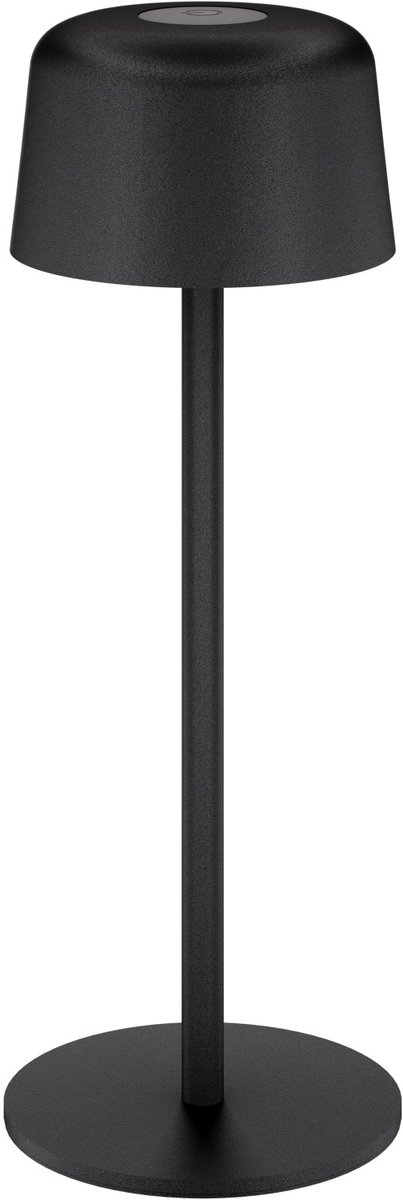
Your bedside lamp is a dimmer switch for your evening
Your body keeps time with light. In the hours before bed, the light reaching your eyes is one of the signals that tells your brain whether it is still day or time to wind down. Bright, cool light says "day". Low, warm light says "evening". That is the whole idea behind a good bedside lamp, and it is why the lamp matters more than the ceiling light you flick on out of habit.
One study that re-analysed data from 116 healthy volunteers compared ordinary room light (under 200 lux) with dim light (under 3 lux) in the eight hours before bedtime. Room light delayed the rise of the sleep hormone melatonin in nearly everyone and shortened its duration by about 90 minutes. Lux is simply a measure of how much light lands on a surface, here your eyes. A normally lit room is often somewhere around 100–200 lux, so "ordinary" is already bright for evening.
None of this means you must live in the dark. It means a small, low lamp near the bed does a different job from a ceiling light, and it is easy to make it do that job well.
Try it: how bright is your lamp, where you sit?
Light fades quickly with distance. Move the lamp and change the brightness step to see roughly how much light reaches your eyes. The numbers are a rough point-source estimate (they ignore the shade and the room), so use them to compare, not to measure.
What makes a lamp good for the evening
Three things decide it. Start with colour temperature, measured in kelvin (K). Around 2700 K is the soft, golden "warm white" of old filament bulbs. Around 3000 K is a little whiter; 4000 K and up looks like daylight or an office. For the bed, stay at 2700–3000 K. Michigan Medicine's sleep guidance makes the same point: shorter wavelengths (blue) suppress melatonin, and dim or reddish light before bed may help you sleep better.
Next is brightness, in lumens. A bedside lamp doesn't need many. Something in the region of 100–200 lumens is plenty for reading a page or two, and the figure matters less than whether you can turn it down. Which brings us to dimming: a lamp with a touch dimmer or a few brightness steps lets one lamp do "read for ten minutes" and "just enough to see the glass of water".
The third is where it sits. As the simulator shows, light falls off fast with distance, so a low lamp on a bedside table, shade pointing sideways rather than straight at your eyes, is gentler than a bright spot above the pillow. Put the lamp below eye level when you lie down if you can.
Rearrange first, buy second
You may already own what you need. A table lamp from the living room, a warm-white bulb (look for "2700 K" on the box) and a plug-in dimmer or a bulb that dims by itself can turn a lamp you have into a good evening lamp. If you rent or share a bedroom, a cordless lamp is handy because it can sit on a shelf, a windowsill or the floor without a cable crossing the room, and it is easy to take with you when you move. Second-hand lamps are plentiful too; just check the cable and plug are in good condition, and leave any ceiling-light wiring to an electrician.
If you do buy, measure first. Measure the width and depth of your bedside table or shelf and compare with the lamp's footprint (a round base of 8–11 cm is typical for small cordless lamps). Check the height too: a shade that sits above eye level when you lie down will shine straight at you. And if the lamp is rechargeable, check where you can charge it and how long a charge lasts at the brightness you will actually use.
What to look for
- Tight budget (around €15–30): warm white (2700–3000 K), a touch switch and a rechargeable battery. A single brightness may be all you get, so pair it with distance: put it further from the bed.
- Middle (around €30–60): proper dimming, so the lamp can go very low, plus 2700 K and a battery that lasts several evenings at low brightness.
- Higher (around €70–100): better build (a diffused shade or glass), several brightness steps and long run time at low settings. You are paying for looks and finish, not for a different kind of light.
Whatever the price, a warm colour and the ability to go low are the two features that matter most. Everything else is taste.