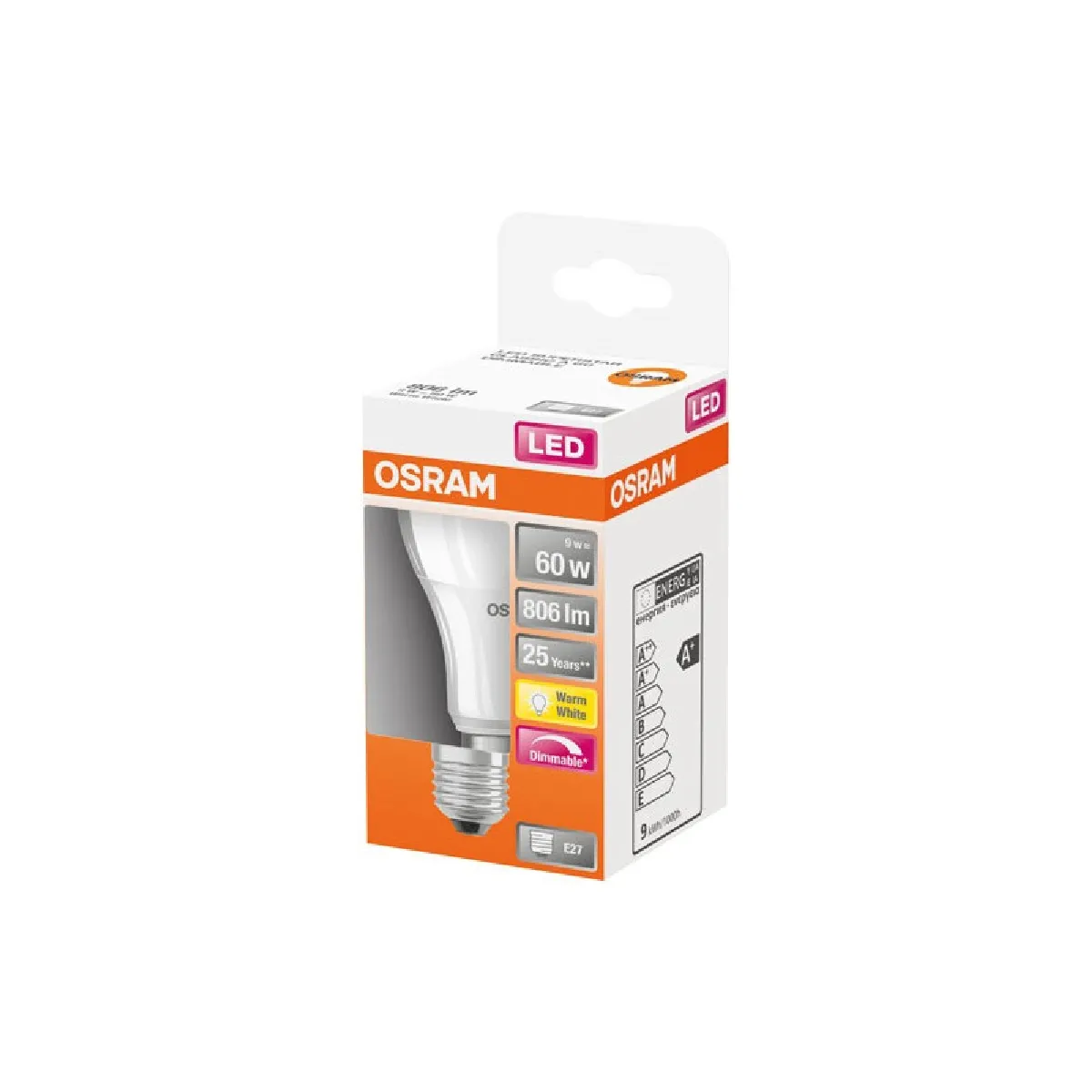
You turn a dimmer down, and the lamp starts to flicker, hum or just stays stubbornly bright. Nothing is "broken": the bulb and the dimmer simply don't speak the same language. The good news is that dimming is one of the cheapest ways to make a room feel calmer, and a few labels tell you whether it will work.
Why dimming is worth getting right
Evening light that is lower and warmer tells your body the day is winding down, and it makes a room look softer. A dimmer lets one lamp do the job of several: bright enough to read at 7 pm, low enough to sit with a book or a conversation at 10 pm. You don't need more lamps for that, only lamps you can turn down.
Two things have to match
A dimmer works by cutting up the electricity many times a second so the bulb gets less of it. An old-style bulb with a glowing wire didn't care how it was fed. An LED bulb has a tiny electronic power supply inside, and that supply has to be built to cope with the chopped-up current. So there are two checks:
- The bulb must say "dimmable". Look for the word or a dimming symbol on the box or on the bulb's base. Many ordinary LED bulbs are not dimmable, and on a dimmer they can flicker, buzz, stay at one brightness or wear out early.
- The dimmer must suit LEDs. Dimmers installed years ago were made for big incandescent bulbs and often expect a minimum amount of power. One small LED can fall below it. Dimmers sold as "LED" or "trailing edge" are made for low-power bulbs.
Try the four combinations below. Slide the dial and watch what each pairing does.
Why half the dial isn't half the brightness
Your eyes adjust to the dark, so a lamp turned down to half its light output still looks much brighter than half. The practical result: a lot of the cosy-feeling range is in the lower part of the dial, and a bulb that is smooth there is worth more than one that is bright at the top. It's also why a bulb that cuts out or flickers near the bottom feels so annoying: that is exactly where you want to be in the evening.
Before you buy anything
Cosy is not about buying more, so start with what you own. Pick up each bulb in the lamps you dim and read the base or box. If it says dimmable, you may be fine already. If the lamp has its own turning knob or a cable switch, that is a dimmer too, and it may suit LEDs better than an old wall one.
Next, look at the lamp itself: the cap type (E27 is the large screw, E14 the small one), the maximum wattage printed near the socket, and how much space the shade leaves. Measure the shade opening against the bulb's diameter, because some rounded bulbs are wider than the classic pear shape and won't fit under a narrow shade.
If your wall dimmer is the old kind and the lights flicker, swapping a wall dimmer is a job for a qualified electrician, not a weekend experiment. A plug-in lamp dimmer or a smart bulb avoids touching the mains wiring at all.
What to look for
- Around €5–10: a bulb that clearly says "dimmable" and "warm white", in the cap your lamp needs. Expect it to dim smoothly down to a low but not tiny level.
- Around €10–20: a well-known brand's dimmable bulb with a wattage that suits the lamp, which tends to behave better with more dimmers.
- Smart bulbs, around €15–20 each: they dim in their own electronics, so they work on a plain switch that stays on. The trade-off is that they are controlled from an app or remote, and the lamp must stay switched on at the wall.
What to buy, if anything
If your bulbs don't say dimmable, or your lamps flicker, a few example picks are below. They are examples, not reviews. If your current bulbs already dim smoothly, you don't need any of them.