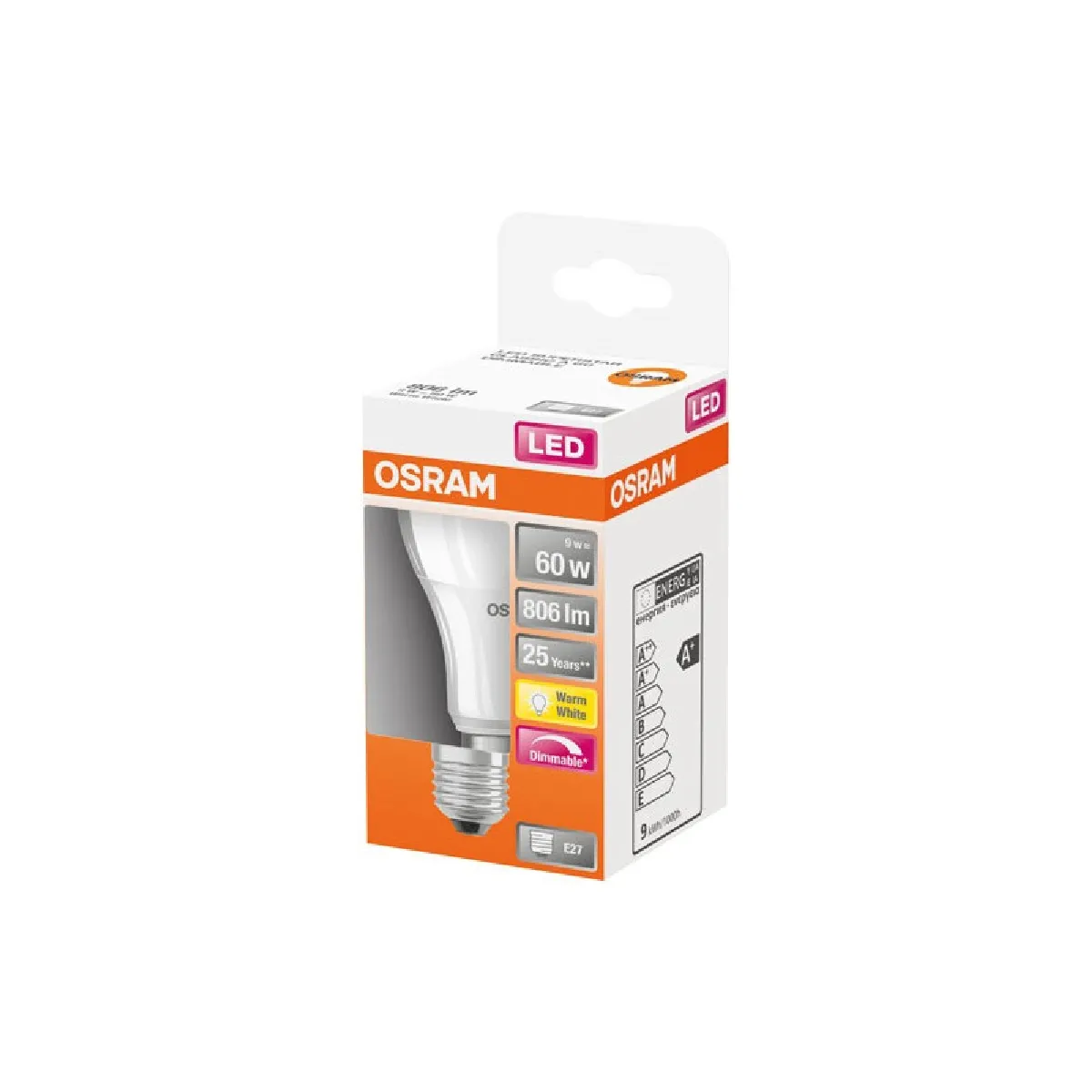
Watts used to tell you how bright a bulb was
For a hundred years, a bigger wattage meant a brighter bulb, so people learned to shop by it. LEDs broke that link. A modern bulb that gives the same light as an old 60 W bulb draws roughly 6 to 10 W, because watts measure the power a bulb uses, not the light it gives. The number to read now is the lumen (lm), printed on the box. A bulb of about 800 lm is the usual stand-in for the old 60 W one, and 470 lm for a 40 W one.
Lumens are easy to read but hard to turn into a decision. How many do a room actually need? Nobody shops for one bulb, they light a room with several lamps, so the useful question is the total lumens in the room.
Lumens per square metre
Light is spread over a floor and the things on it, so a bigger room needs more of it. The tidy way to say that is lumens per square metre. One lumen landing on one square metre is called one lux, so you will also see these targets written in lux. Multiply by your floor area and you get a total to aim for.
Published guides disagree, sometimes by a factor of two, because they are rules of thumb and not laws, and because people differ in what feels cosy. The ranges in the planner below sit in the middle of what guides suggest. Think of them as a starting point and a way to spot a room that is far too dark or far too bright, not as a target to hit exactly.
Plan a room's light
Reading the result
Try the living room first, then switch to the kitchen without changing the size. The kitchen asks for noticeably more light per square metre, because you are cutting, reading labels and handling hot things. A bedroom asks for less, because most of what you do there is wind down. If you flip from light to dark walls, the aim shifts toward the upper half of the range, since dark surfaces soak up light instead of bouncing it back.
Notice too that several small sources beat one big one. Three or four lamps at 400 to 800 lm each, set at different heights, make a room feel warmer and calmer than one ceiling light at full power, and they let you choose how much to switch on.
When to break the numbers
Treat the range as a place to start. If you read a lot, find small print hard to see, or have a dark, high-ceilinged room, you will probably like the top of the range or a little over it, in the right spots. If you mostly use a room in the evening, the bottom is often plenty. A dimmer removes most of the guesswork, because you can buy a little more than you need and turn it down.
The room total also hides where the light lands. A bright spot in a corner does not light the sofa. Put the light near the thing you are doing: a lamp beside the armchair, a strip under the kitchen cupboards, a desk lamp that is not behind your head.
Measure before you buy
- The room. Measure the width and length of the floor in centimetres, and multiply to get square metres. That is the number the planner uses.
- The socket. Look at the old bulb or the fitting for the cap code.
E27 is the large screw, E14 the small one, and a few lamps use other types.
- The space. Check the maximum size or wattage printed on the lamp or shade. A bulb that is wider or longer than the shade allows can sit too close to fabric and get hot.
- The dimmer. If a lamp or ceiling fitting is on a dimmer, buy bulbs marked dimmable, and check the maker's compatibility list. Changing the dimmer itself, or anything on a ceiling light's wiring, is a job for an electrician.
Use what you have first
Cosy does not need more bulbs. Before you buy, move a lamp from a room that is bright enough to one that is not. Dust on the bulb and the inside of a shade cuts the light you get, so wipe them with the lamp unplugged and cool. A second-hand lamp with a good shape and a fresh bulb costs less than a new one. And a brighter bulb is not always the answer when the real problem is a single overhead light: a second lamp across the room often fixes it more kindly.
What to look for
- On a small budget: the right cap, a warm-white colour (around 2700 K, the colour of the old bulbs), and a lumen figure near the size you worked out. Do not pay extra for features you will not use.
- In the middle: check that it is dimmable if you have, or may want, a dimmer, and that the box lists a compatible dimmer or a clear lumen range.
- If you want to spend more: smart bulbs let you set several brightness levels from a phone and group lamps together. Check that you have the app, the hub or the voice assistant it needs before you buy.