Plants & Balcony · Tool · 4 min ·
How heavy is a planter once it's watered? Soak it and see
A planter is much heavier once it has been watered than it looks, because potting mix soaks up water like a sponge. Put in your planter's measurements, drag the slider from bone dry to just watered, and watch the scale. Then place a few on your balcony and see how much of its load allowance they use.
A watered planter weighs about a kilo for every litre of soil, plus the pot. Lighter pots, lower placement and spreading things out keep a balcony cosy and safe.
A watered planter weighs far more than it looks
Dry potting mix is surprisingly light. Pour water on it and it behaves like a sponge: a litre of mix that weighs a few hundred grams when dry can weigh close to a kilo when it has just been watered. Peat-based mixes tested by horticulture researchers come out at roughly 0.9 to 1.1 kg per litre once they have been watered and have drained, and mixes with sand or bark can be heavier still.
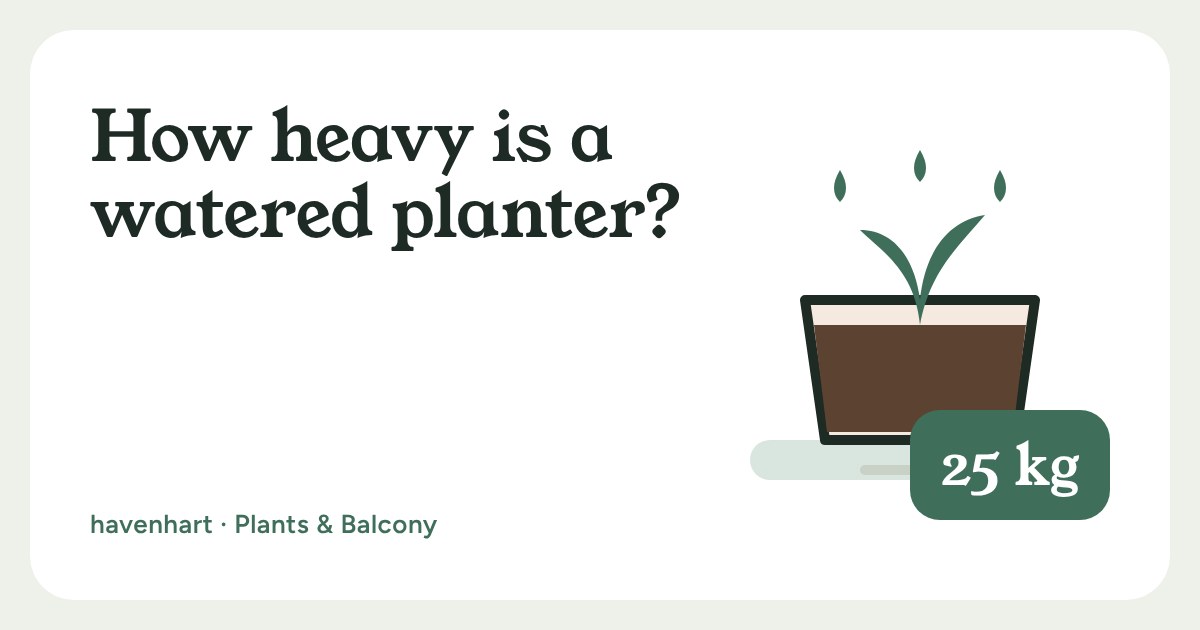
That gives you a handy rule of thumb: a watered planter weighs about one kilo for every litre of soil, plus the weight of the pot itself. A 60 cm balcony trough that holds 20 litres is a 20 kg object after a good watering, before you count the plants. Lifting it onto a shelf or railing is a different job from lifting the empty box you bought.
The rule of thumb behind the number
Water weighs 1 kg per litre. Potting mix is mostly air and bark or peat when dry, so it weighs little. Once the air gaps fill with water, the mix gets close to the weight of the water itself. That is why the slider above moves the total so much: the same planter can be less than half the weight on a dry week.
The pot is the other half of the sum. A plastic trough adds almost nothing. A terracotta or glazed ceramic pot can weigh as much as the soil inside it, and concrete or stone can weigh more. The planner uses rough averages per litre of pot, so for a heavy or unusual pot, weigh it empty.
What it leaves out
The plants themselves add a few kilos for big shrubs. A drainage layer of gravel or clay balls changes the sum, and so does a saucer full of water. Garden soil or compost-heavy mixes can run heavier than potting mix, and rain can soak a trough far past what you gave it. If in doubt, round up.
What a balcony is built to carry
Balcony floors are designed for a spread-out allowance that has to cover everything: people, chairs, a table, snow and, yes, plant pots. In many European countries that design figure falls somewhere around 250 to 400 kg per square metre, set by each country's own building rules. It is a design value with safety margins built in, not a number to aim for, and your building may be older or built to a different rule.
The planner's dashed line at 250 kg per m² is therefore a cautious yardstick, not a pass or fail test. The people-and-chairs figure is an assumption (two adults and two light chairs); a crowded party or a heavy table would use more of the allowance than shown.
If you rent or live in a flat, your landlord, building manager or owners' association can tell you what the balcony is rated for, and whether there is a rule about planters or water on the floor.
Keep heavy planters low, and off the railing
- Put the heaviest planters on the floor, against the wall, close to where the balcony meets the building rather than at the free edge.
- Spread them out rather than lining up five troughs in one corner, so the weight is shared across the slab.
- Don't hang or rest a heavy planter on a railing unless the planter and its brackets are made for your railing and the railing is rated for it. A wet 60 cm trough is a 20 kg object to drop on whoever is below.
- Lighter is a good answer: plastic or fibreglass pots, a lighter potting mix, or a smaller pot with a bigger plant that tolerates it. You do not need more pots to make a balcony feel cosy; two well-placed ones can do it.
- Check you can carry it, too. Fill the pot where you will keep it, or half-fill and top up, instead of hauling it up the stairs already full.
Measure before you plan
Measure the inside length, width and soil depth of each planter (or the inside diameter of a round one) and the length and depth of the balcony floor you can actually use. Then try your real planters in the planner, and weigh one on a bathroom scale after watering to see how close it gets. If your numbers disagree with the planner's, trust the scale.