Budget€2.95
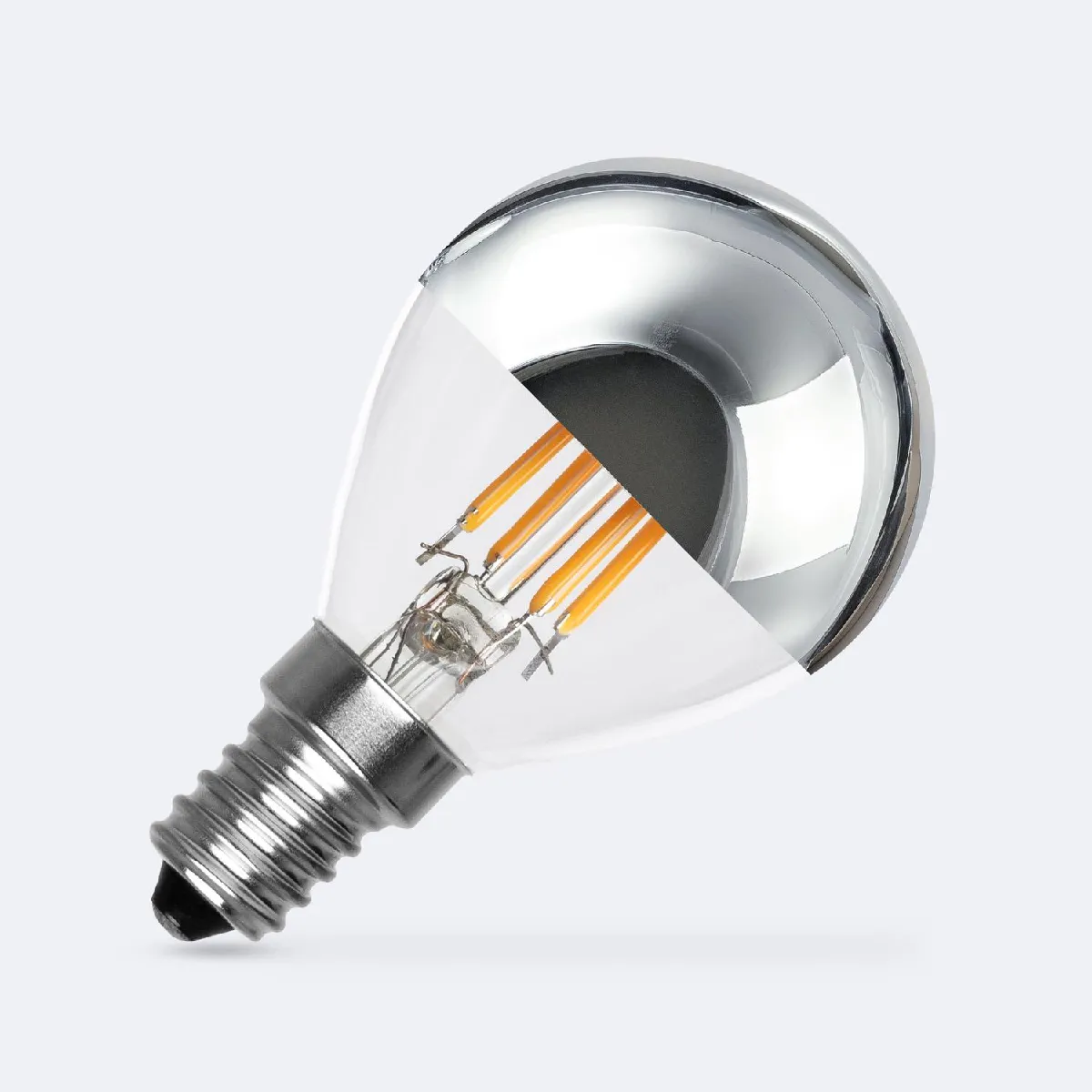
Ampoule Filament LED E14 4W - 2200K - Blanc chaud
A very warm filament-style bulb for small E14 fittings. Good for trying out amber light in one lamp before changing anything else.
2200 K · E14 · 4 W filament
Lighting · Explainer · 4 min ·
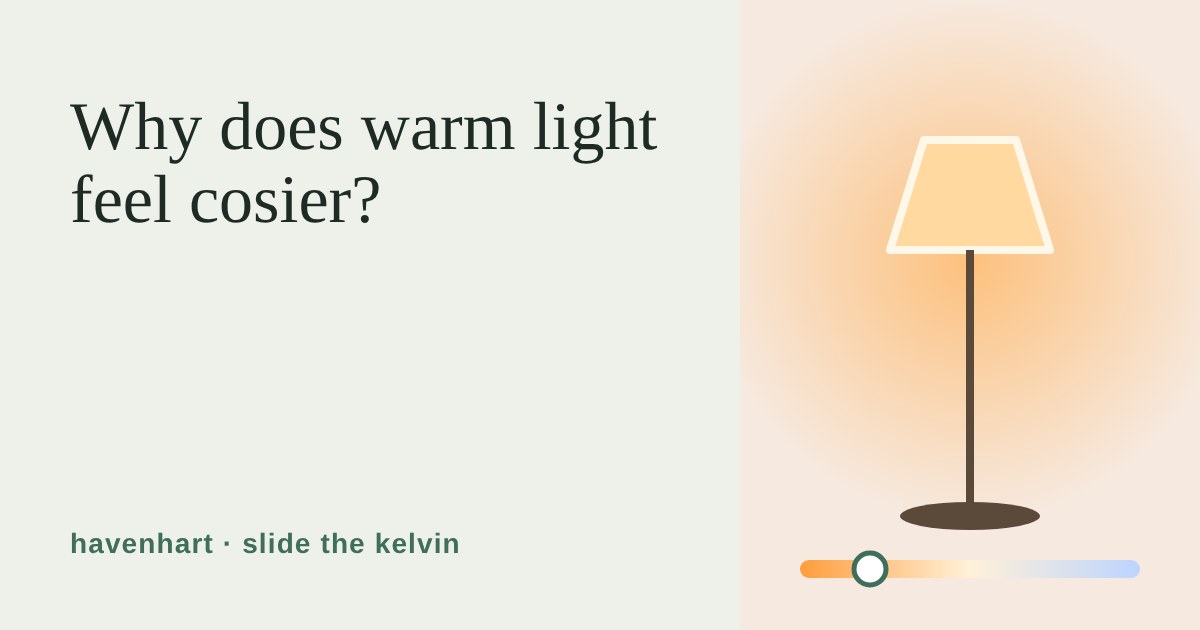
The number on a bulb box, like 2700 K, is its colour temperature, and lower means warmer. Slide it from candle-flame orange to daylight blue and watch the same living room change, then see which kelvin suits which room.
Cosy rarely means buying more: swapping one bulb is often enough. Check the cap, the shade and the kelvin number before you buy.
Every bulb box has a number followed by a capital K, like 2700 K. It is the colour temperature: how warm (yellow-orange) or cool (blue-white) the light looks. It borrows the scale from a glowing piece of metal. Heat metal a little and it glows orange; heat it a lot and it glows white-blue. So a lower number means a warmer light, which trips up almost everyone the first time.
For reference: a candle flame sits around 1,800–2,000 K, the old-style incandescent bulbs we all grew up with were about 2,700 K, and daylight runs from roughly 5,000 K to 6,500 K. Shops often label bulbs "warm white", "cool white" and "daylight", and as a rough guide those mean around 2,700–3,000 K, 3,500–4,500 K and 5,000 K and up. The words are loose, so the number on the box is the part to trust.
Slide the temperature and watch the same living room change. Nothing in the room moves; only the light does. Tick the comparison box to see your setting next to a classic 2700 K bulb.
Part of it is habit: for most of human history, evening light came from fire, and our idea of "relaxed" light is the amber glow of flames and old bulbs. Part of it is how colours behave. Warm light flatters wood, fabric, skin and cream walls, so a room looks richer and the people in it look healthier.
There is a biological side too. Lab studies have found that evening light rich in blue wavelengths suppresses the sleep hormone melatonin more than warm light of the same brightness, and keeps people more alert. That does not mean cool light ruins your sleep, and brightness matters as much as colour. But if you want to wind down, dim, warm light in the evening is a safe bet.
You do not need one number for the whole home. A simple way to choose:
Whatever you choose, keep the bulbs within one room close together, within a few hundred kelvin. One 2700 K lamp next to one 4000 K ceiling light makes the warm one look dirty yellow and the cool one look grey.
Cosy does not mean buying new lamps. If a bulb is too cool, the cheapest fix is swapping just that bulb for a warmer one in the same fitting. You can also move a lamp, lower the brightness, or switch off the harsh overhead light and use one or two lamps at low level instead. Second-hand lamps are great: the bulb is the part that decides the colour, and it costs a few euros to change.
Before you buy, check the cap and the shade. Look at your fitting: E27 is the large screw cap and E14 is the small one. Also measure the space inside the shade (height and width) and compare it with the bulb size on the box, and read the maximum wattage printed on the lamp. Then look at these three things on the packaging:
At a tight budget, a plain warm-white LED in the right cap does nearly all of the work. Extra money mostly buys dimming, smart controls and nicer-looking filaments, not better cosiness.
Affiliate links, marked sponsored. We may earn a commission at no extra cost to you. Examples that match this guide, not tested reviews. Prices checked 6 Oct; every shop is on each product page.
A very warm filament-style bulb for small E14 fittings. Good for trying out amber light in one lamp before changing anything else.
2200 K · E14 · 4 W filament
A filament-style bulb whose colour temperature you can change, so you can set it warm for evenings and clearer for tasks in the same lamp.
Warm to cool white · E27 · Smart filament
A classic 2700 K warm-white bulb with enough light for a living-room lamp; it is a smart bulb, so it can be dimmed from an app.
2700 K · E27 · 9.5 W, 806 lm
