Textiles · Explainer · 4 min ·
Do you need a rug pad? Slide the rug and see
Why does a rug creep across a smooth floor, curl at the corners and catch a toe? Your push goes one way and friction holds the other, and tile, sealed wood and vinyl give a rug very little to grip.
Pick a floor, add or remove a pad, set the push and watch the rug slide or stay put. You also get a door-clearance check for rug plus pad, the rough 2.5 cm rule for pad size, which pad types can mark floors, and free fixes to try before you buy anything.
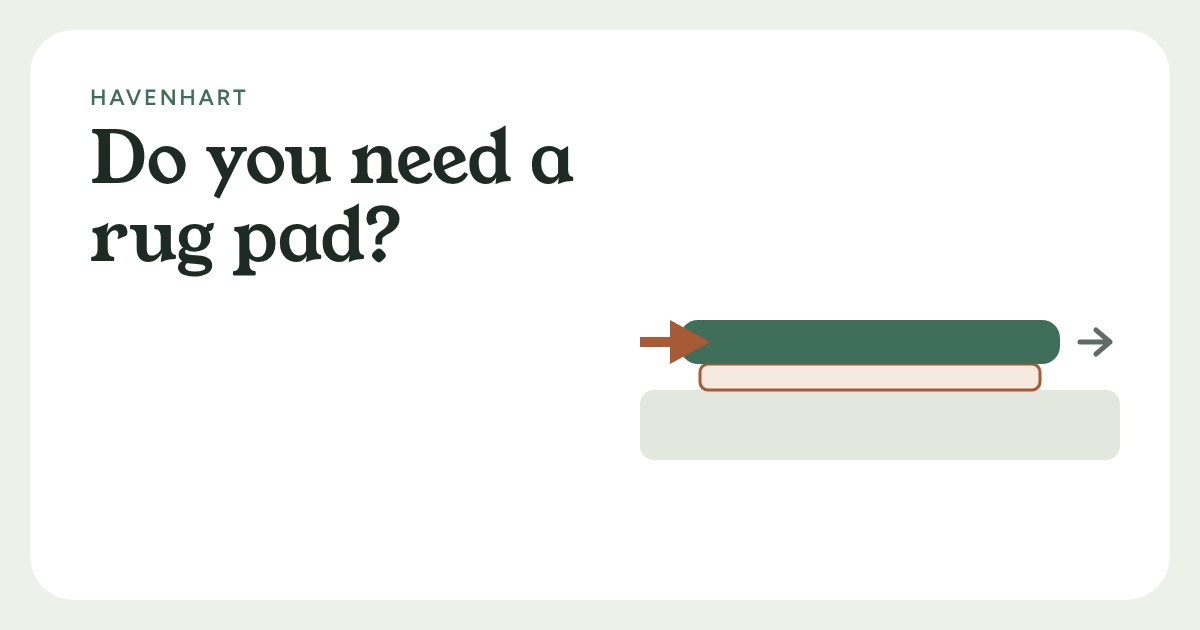
A rug that slides is more than annoying. Its corner curls, someone catches a toe, and you spend every morning nudging it straight. The usual fix is a thin layer underneath, called a rug pad or underlay. But do you really need one, and can the wrong one do harm?
What a rug pad actually does
It does three jobs. It adds grip, so the rug stays where you put it. It adds a little cushion, which makes thin rugs feel softer underfoot. And it puts a buffer between the rug's back and your floor, which can reduce rubbing on the floor's surface.
Grip is the one most people feel. Smooth floors such as tile, sealed wood and vinyl give a rug very little to hold on to, so a push from a foot, a chair leg or a vacuum cleaner is enough to shift it. Try it below.
Cushion is a bonus, not a must
A thicker pad feels softer, which can be lovely under a thin flatweave in a bedroom or beside a sofa. It is not a must, though. Deep-pile rugs already have their own bounce, and extra thickness can make rugs sit higher and catch on doors, chair legs and robot vacuums. Choose the thinnest pad that does the job you need.
Why smooth floors are the problem
Whether a rug moves comes down to a tug of war. Your push goes one way, and the friction between the rug's back and the floor holds the other way. Heavier rugs hold better because their weight presses harder, which is why a big rug under a sofa rarely wanders but a small one in a hallway does. A pad with a rubbery side raises the friction. Plain felt helps a little and mostly adds cushion.
Rugs in a hallway get the worst of it, since people step on one end as they walk in. If a rug keeps creeping, a pad is usually cheaper than moving furniture onto it.
Check the pad is safe for your floor
This is the part people skip. Some synthetic pads, particularly PVC ones, can react with certain floor finishes and leave marks, and luxury vinyl plank is a commonly cited example. Some rubber compounds can also mark sealed wood. Natural rubber and felt are the usual lower-risk choices, but the real answer sits with your floor's maker. If you rent, check the floor care advice or ask the landlord before you lay anything rubbery for months. If you have underfloor heating, check what the heating and floor makers say about pads and rugs too.
Size: a little smaller than the rug
A pad should sit hidden. A common rule is to choose one about 2.5 cm shorter and narrower on each side than the rug, so the edges can't peek out or catch a toe. Measure the rug, then subtract about 5 cm from each dimension, and trim the pad with scissors if you need to. The exception is a very thin, light rug that curls at the edges: a pad cut to the full size can help there, if you tuck it so nothing shows.
It adds height, so check your doors
A pad is only a few millimetres thick, but it stacks with the rug's pile. Doors that swing over a rug can catch, especially in hallways and kitchens where gaps are tight. Check it with your own numbers.
Do you need one at all?
Often a rug needs help only in a few spots, and the cheapest fix is the one you already own.
Not always. A big rug that sits under the sofa legs, or a rug on carpet, may stay put with nothing. Try these free fixes first: move the rug so furniture legs sit on it, flip it and see if the back is slicker than the front, or lay it on a different part of the floor. Second-hand pads exist too, and an old pad can be cut down to size.
What to look for
- Safe for your floor: natural rubber or felt for sealed wood, and the floor maker's advice for vinyl, laminate and heated floors.
- Thin enough for your doors: measure the gap and add the pad to the rug's thickness.
- Cut to size: about 2.5 cm inside each edge of the rug, so measure the rug before you buy.
- Gripper tabs for tight budgets: they hold the corners of light rugs, but a full pad also adds cushion.