Dining & Kitchen · Tool · 4 min ·
How far should a tablecloth hang? Drag the hem and see
A tablecloth that is a little too short looks like a mistake, and one that is too long ends up under chair legs. The number that decides it is the drop: how far the cloth hangs below the table edge.
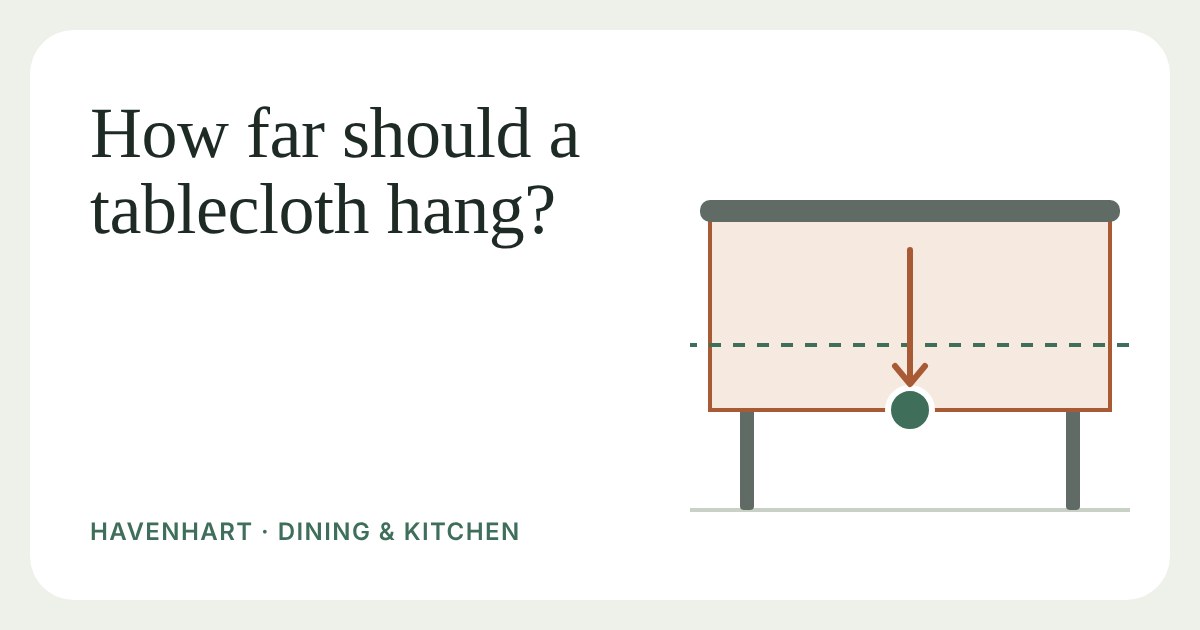
Drag the hem to see what it passes on the way down (the edge, laps, the chair seat, the floor). Enter your own table's measurements and get the cloth size to look for.
A tablecloth that is a little too short looks like a mistake. One that is a little too long ends up under chair legs and in people's laps. The number that decides it is the drop: how far the cloth hangs below the edge of the table.
Drop first, cloth size second
Shops list a tablecloth by its total length and width, but you choose it by drop. Once you know how far down you want the cloth to hang, the size is simple: table length + 2 × drop by table width + 2 × drop. Round tables work the same way: diameter + 2 × drop.
So the question to answer is where the hem should land. Drag the hem in the picture below, or use the slider, and watch what it passes on the way down.
Where the hem can land
Guides disagree a little, which is a good sign that there is no single right answer. Most put a casual or everyday drop at roughly 15–30 cm, and a longer "lap-length" drop at about the height of the chair seat. On a standard 75 cm table, that means a drop of around 30 cm. Floor-length cloths are the formal option, and they suit tables that are not used every day.
- Under about 10 cm: tidy, but the cloth shifts easily and shows the edge of the table.
- About 15–30 cm: clears the edge, stays off laps, and works for most meals.
- Around seat height: a soft, generous look. Check that it doesn't get caught on chair arms or snag when people sit down.
- Between the seat and the floor: the awkward zone. The hem swings against knees and chair legs.
- Floor-length: formal and dramatic. Chairs catch the fabric when they are pulled out, and on a rectangular cloth the corners hang lower than the sides, so rounded corners help.
Measure before you buy
Measure the tabletop length and width at its widest points, including any leaves you use. Then measure the table height from floor to the top, since a "floor-length" drop is simply that number. If you want to see how a cloth looks on chairs, measure the seat height as well, and check whether your table has an apron or legs that stick out at the corners.
Check the stated size on the label against your own maths, and leave a little room for the cloth to be washed. Natural fibres like linen and cotton can shrink, so a cloth that is exactly right when new may come out slightly short. Rounding the drop up by a few centimetres is cheap insurance.
What to look for, if you are buying
- On a small budget: choose the size by drop, not by "fits six people". A plain cotton or cotton-blend cloth in the right size looks better than a larger one folded under.
- If you already own a cloth: try it first. A cloth that is too long for one table often suits a bigger one, and a cloth that is too short can sit on a smaller table or work as a runner across the middle.
- Shop the second-hand market: old linen is often large, sturdy and soft, and can be shortened with a simple hem if the drop is too long.
- Care: pick something that suits the way you live. If your table sees spills and school-day crafts, a wipeable or easily washed cloth makes more sense than a delicate one.