Colour & Walls · Explainer · 3 min ·
How high should you hang a picture? Drag it and see
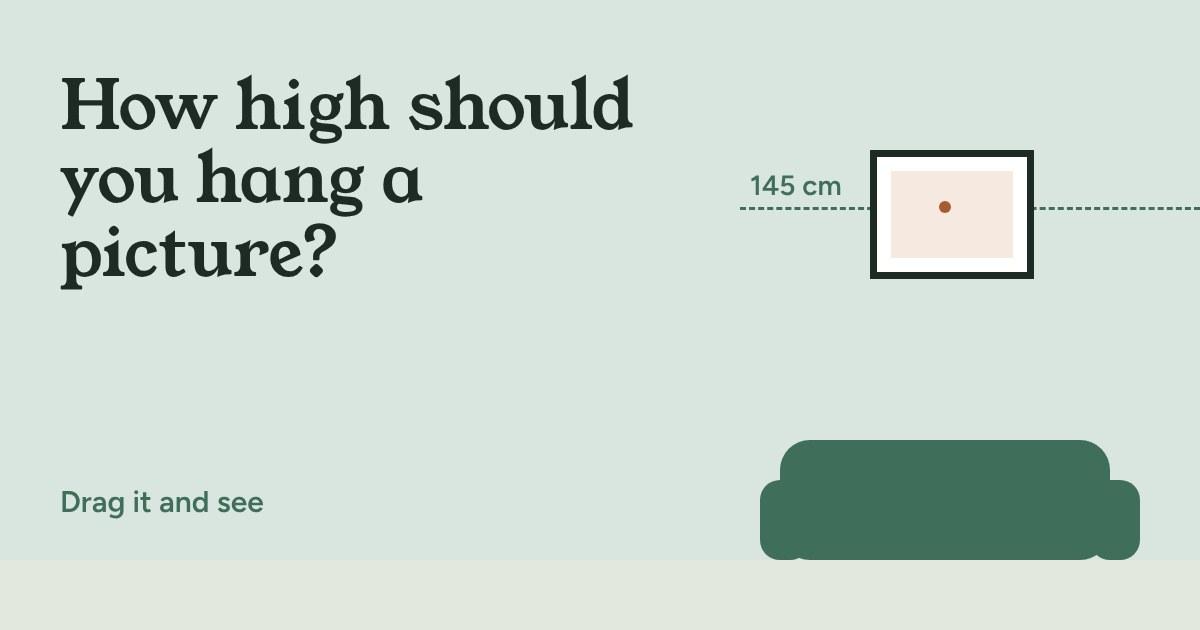
Most pictures are hung too high. The fix is one number: put the centre of the frame about 145 cm from the floor, roughly eye level for a standing adult.
Drag a picture up and down a wall, switch between an empty wall, a sofa and a sideboard, and see when it feels right, cramped or floating. Then learn how to find the nail position, how to hang a gallery wall, and when to break the rule.
Why pictures end up too high
Most wall art is hung too high. We measure from the ceiling, or from where the nail looks nice while we stand on a chair, and the picture ends up floating above everything else in the room. The fix is one number: hang art so its centre is about 145 cm from the floor (57 inches, the figure galleries and many decorating guides use). That puts the middle of the picture at roughly the eye level of an average standing adult.
The number is a starting point, not a law. Art over a sofa or sideboard should relate to that furniture instead of the floor, and a family that mostly sits in the room can go a little lower. Try it below: drag the picture, change the furniture and see what the wall says.
The 145 cm rule, and where it comes from
Galleries hang art so the centre of each piece is about 145 cm from the floor. The key word is centre. A tall picture and a small one both get their middle at 145 cm, which means a big frame reaches both lower and higher than a small one. That is why measuring to the top edge goes wrong.
To hang one picture: measure the height of the frame, halve it, and subtract the distance from the top of the frame to the hanging point (the wire or hook when pulled taut). Add 145 cm. That is where the nail goes.
Above a sofa, bed or sideboard
When art sits over furniture, the furniture decides, not the floor. Guides often suggest leaving about 15 to 25 cm between the furniture and the bottom of the frame. Closer feels cramped, much further and the picture floats on its own. Over a high-backed sofa this can push the centre above 145 cm, and that is fine.
A common suggestion is a picture, or a group, about two-thirds to three-quarters of the width of the furniture below. Narrower looks lost, wider looks heavy.
Gallery walls: centre the group, not each frame
For several frames, treat the whole group as one big picture and put its middle at about 145 cm. Keep the gaps between frames even; roughly 5 to 10 cm is typical. Lay the frames on the floor first, or cut paper templates and tape them to the wall, so you can move things around before you make any holes.
When to break the rule
- High ceilings or tall walls. A single small picture at 145 cm can look lost. Use a bigger piece or a group.
- Rooms where you sit. Beside a dining table or a reading chair, lower the centre so it suits seated eyes.
- Stairs. Follow the slope of the stairs and keep the same distance from each step.
- Children's rooms. Hang lower, at their eye level.
Renters and no-drill walls
Most of this works without damaging walls. Picture ledges let you rest and swap frames at the right height, and you can lean frames on a sideboard or shelf. If you hang something, adhesive strips can work for light frames, but check the weight limit on the pack and test a hidden spot first, since some paints peel. Heavy mirrors and anything above a bed need proper fixings into the wall; if you are unsure what is behind the surface, check before drilling for pipes and cables.