Colour & Walls · Explainer · 4 min ·
Matt, eggshell or satin? Slide the lamp and see which finish hides your wall's flaws
Two tins of the same colour can look completely different on your wall. The difference is sheen: how much light bounces off like a mirror instead of scattering softly. It decides whether walls look calm and velvety or whether every dent, filler patch and roller mark stands out.
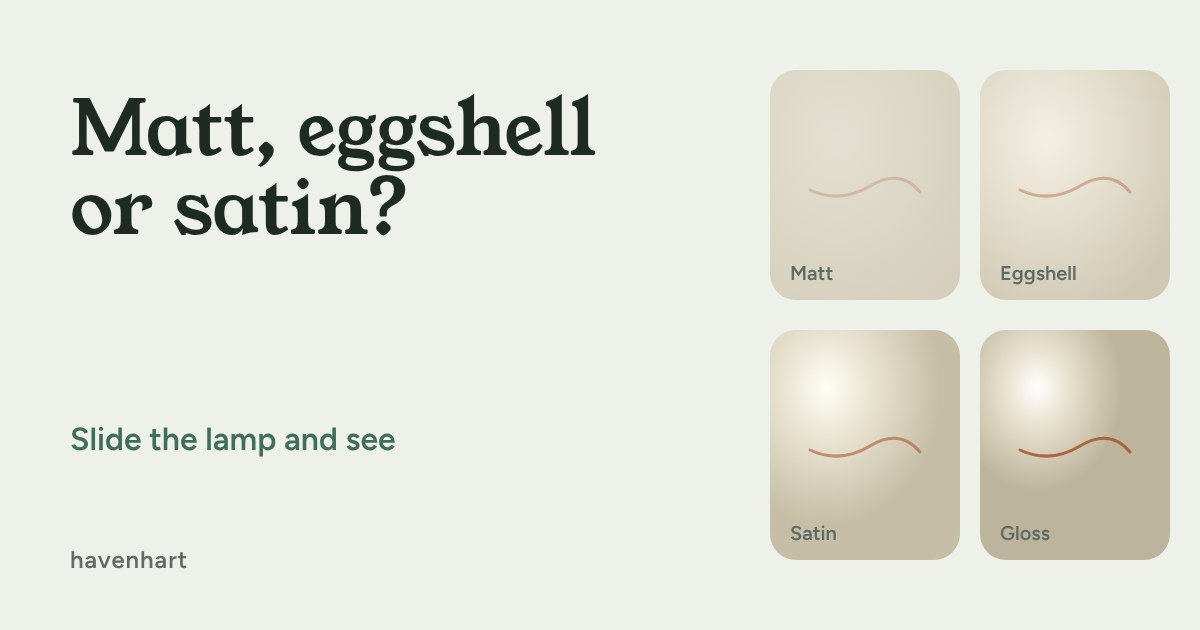
Pick a finish, slide a lamp from straight-on to skimming along the wall, and watch a flawed patch of wall change. Plus which sheen suits which room, what to do in a rental, and three quick checks before you open a tin.
Two tins can be the exact same colour and still look completely different on your wall. The difference is sheen: how much of the light bounces off the surface like a mirror instead of scattering softly. It decides whether your walls look calm and velvety or whether every ripple, filler patch and roller mark stands out.
What sheen means
Sheen (also called gloss level or finish) is measured in gloss units, abbreviated GU. A lab shines a light at the dried paint at a fixed angle, usually 60°, sometimes 85° for very flat paints, and measures how much comes straight back. A higher number means a shinier surface.
Roughly, as a rule of thumb: matt paint sits at about 0–10 GU, eggshell (sometimes called mid-sheen or silk) at about 10–25, satin at about 25–35, and semi-gloss and gloss from about 35 upwards. Those names are not standardised. One brand's satin can be shinier than another brand's, so if the finish matters, look for the GU figure on the technical data sheet instead of trusting the name on the tin.
Slide the light and see
Below is a patch of wall that is not perfect, like most walls: a faint crack, a dent and a filled patch. Pick a finish, then slide the lamp from straight-on to skimming along the wall.
Why shiny shows flaws
Every wall has tiny bumps. Matt paint has a rough surface at microscopic level that scatters light every which way, so a bump becomes a barely different patch of the same soft light. A glossy surface behaves more like a mirror: each slope throws the lamp's reflection in a new direction, so the eye catches a line, a glint or a shadow where the bump is.
Angle matters just as much as finish. Light that faces the wall flatters almost any surface. Light that skims along it, from a window beside the wall or a lamp at the end of a hallway, exaggerates every ripple. That is why a wall can look fine at noon and rough at sunset.
Which sheen where
- Ceilings: usually dead matt. Light hits them from the side and the flat finish hides joins and texture.
- Living rooms and bedrooms: matt or eggshell. You see these walls in lamplight at low angles, and a soft finish looks calmer.
- Hallways, kids' rooms, kitchens: eggshell or satin. They take more scuffs and wiping, and a bit of sheen usually makes marks easier to clean off. Very flat paint can mark more easily, though modern washable matts are improving.
- Woodwork, doors and radiators: satin or gloss, because they get touched and wiped most.
- Old or uneven walls: stay matt. A shinier finish will show every patch.
Rule of thumb: the rougher the wall and the lower the light, the flatter the paint should be.
When you rent or the wall isn't perfect
Most rentals have walls that have been patched and repainted many times. That is a good reason to choose matt or eggshell rather than satin. Ask your landlord before repainting at all, and ask which finish was used last so that touch-ups blend in. A cosy room does not need perfect walls; it needs a finish that stays quiet and lets the lamps and textiles do the talking.
Three checks before you open a tin
- Torch test. In the evening, hold a phone torch flat against the wall and sweep it along. Every dent and ridge lights up. Mark the ones that bother you and fill them before painting, or choose a flatter finish.
- Test patch. Paint a large sample, about A3 size, on the wall itself and look at it in morning, noon and evening light. Small cards from a shop rarely show how the sheen will really look.
- Read the data sheet. Look for the GU figure or the gloss class, not just the name. Two "eggshell" tins can look quite different.
You do not need to repaint anything to get the benefit. Moving a lamp so it faces a rough wall, rather than skimming it, can hide flaws for free.