Dining & Kitchen · Tool · 4 min ·
Can a bench replace dining chairs? Squeeze them in and see
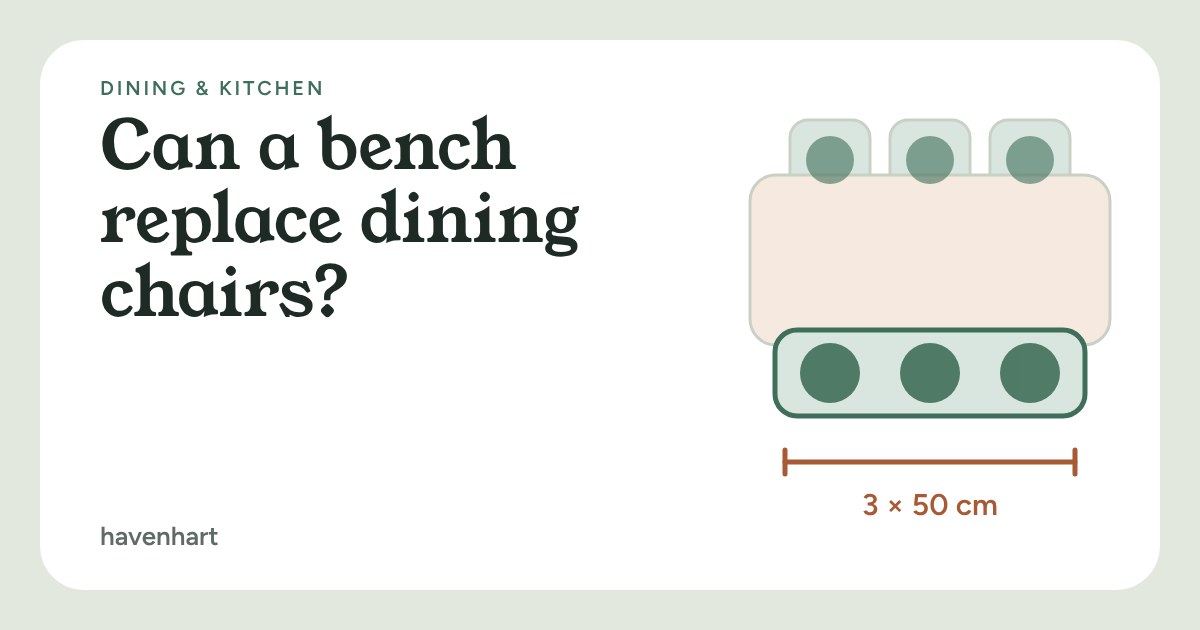
Can a bench really replace dining chairs? Often yes: with no arms or fixed gaps, a bench lets adults sit closer, roughly 50–55 cm each instead of the 60 cm a chair claims.
But a bench only works if it fits the table and the room. Play with the planner to test how many people sit on your bench, whether the seat clears the underside of the table, and whether there is space behind to pull it out.
Why a bench looks like it seats more
A bench has no arms, no gaps and no fixed seat edges, so people can sit closer together. That is the whole trick. Chairs each claim a slot of about 60 cm of table edge. On a bench, most adults are fine with 50–55 cm each, and children need less. Guides that list bench lengths by number of adults work out at roughly 45–65 cm per person, so treat 50–55 as a sensible middle.
The catch is that a bench is only as good as the room around it. It has to slide under the table, you have to be able to pull it out, and the people in the middle are stuck until someone else moves. The planner below lets you test all of that with your own numbers.
The numbers that make a bench comfortable
Seat height is usually around 45 cm, which suits a standard 72–76 cm table. Depth runs from about 38 to 50 cm, with roughly 44 cm common; much deeper and a bench without a back becomes awkward to sit on. The gap from seat to the underside of the table is the one people forget. Aim for roughly 25–30 cm. If your table has an apron (the frame under the top), measure to the bottom of that, because the bench has to slide beneath it.
Length is set by two things: how many adults you want to seat, and how much room you have between the table's legs. A bench that is longer than the gap between the legs can never tuck fully in, so measure that gap before anything else.
Behind the bench you need space to pull it out. Around 120 cm from the table edge to the nearest wall or furniture lets a bench come fully out; 90 cm lets people pass, but you will slide in from the end rather than pulling it back.
When a bench is the wrong call
Benches work well for families, for small rooms against a wall, and for fitting one more person at a crowded dinner. They are less kind to anyone who needs a backrest or arms to stand up, and the person in the middle has to wait for a neighbour to move. A good compromise is a bench on one side and chairs at the ends and opposite side, so the people who need the support get it.
Cosy does not need a new purchase. A sturdy hallway or storage bench you already own, a long plank bench from a second-hand shop, or a bench borrowed from the garden for a big dinner can all do the job. A flat cushion with a non-slip underside makes a hard seat friendlier, and felt pads protect floors in a rental. Keep children from standing on a bench, and check that a long one doesn't rock before everyone sits down.
What to look for
Check the height against your table and the seat-to-underside gap from the planner. Check the length against the space between the legs, not just the table length. Check the depth too: shallow benches feel perched, very deep ones push knees into the table when pulled in. If you are choosing a bench for a table you do not own yet, take the measurements to the shop with you and compare the numbers, not the look. We have not added product picks to this guide, because benches are thin on the ground in the shop listings we can search.